Design & Interiors
The Walls Are Talking Again
Wallpaper has moved past decoration. In 2026, it is doing something quieter, and considerably more interesting.
2026 Design Notes
For most of the last decade, the aspirational American interior was a stripped back one. White walls. Raw materials. Restraint as a virtue. It was a beautiful idea, and for a while it worked.
Wallpaper is now filling in the silence.
Not the wallpaper of past decades. This iteration is more textured, more restrained in color, and considerably more considered in the way designers are using it. Rachel Cope of Calico Wallpaper described the shift to ELLE Decor as wallpaper moving beyond decoration and into the realm of atmosphere and emotion. That is the sentence that explains almost everything happening on stylish walls right now.
Texture Is Doing the Heavy Lifting
The most immediate shift is tactile. After years of screens and flat finishes, designers are reaching for materials you can feel from across the room. Grasscloths. Silk painted murals. Linens layered with mineral pigments. Plaster effects that shift with the light.
Todd Nickey of Nickey Kehoe designed a Japanese inspired plaid on grasscloth for exactly this reason, arguing that these surfaces add depth to a room without demanding attention. San Francisco designer Anu Jain framed the trend as a reaction to the last decade of digital flatness. Materials that feel human are back in demand because, as she put it, these walls have soul, they shift with the light, they age beautifully.
Grasscloth in particular is having its moment. It reads casual and refined at the same time, which is a rare quality in any surface.
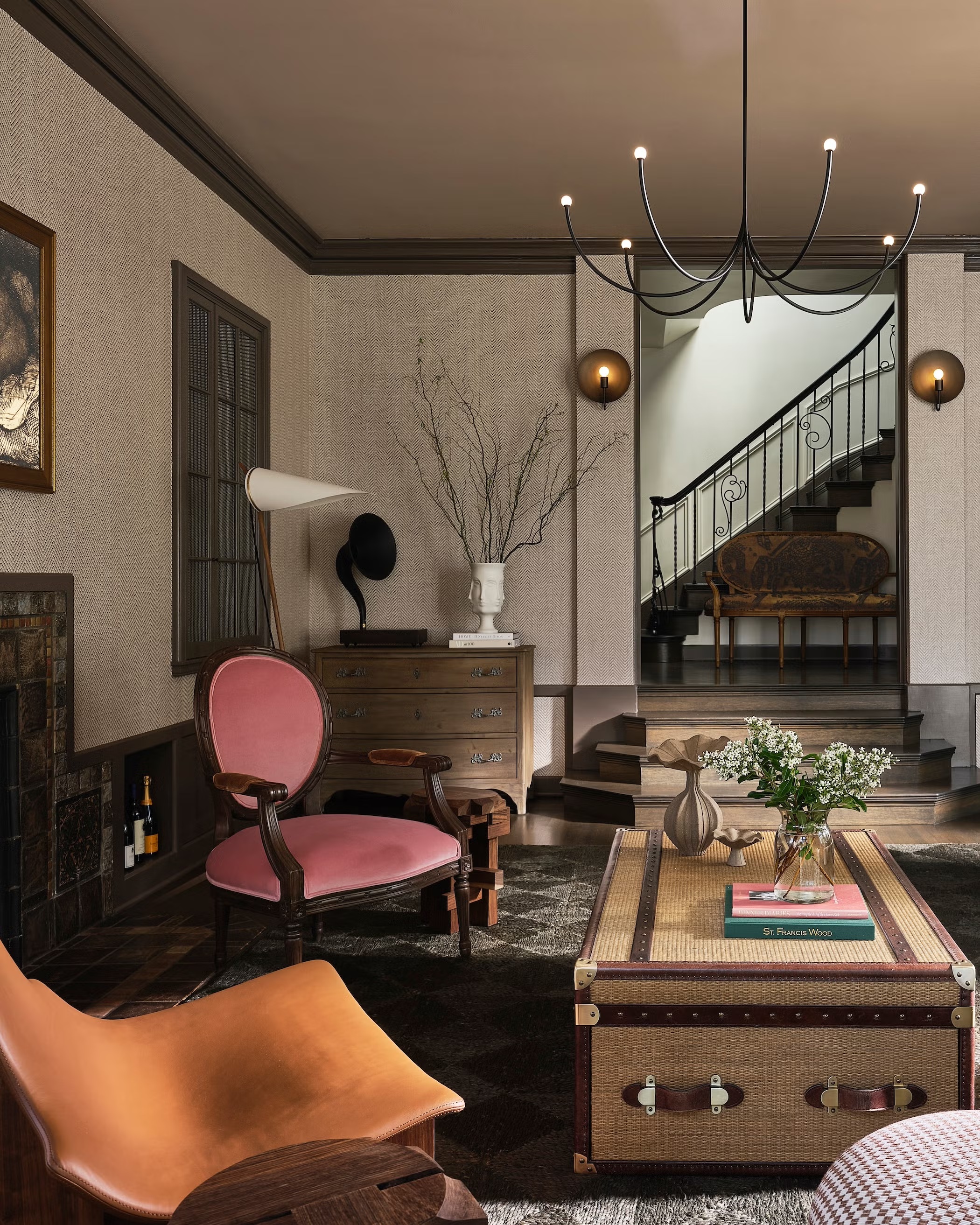
Textured wallpaper by Atelier Oleana
Heritage, Reimagined
The second shift is about pattern. The big graphic statements of a few years ago are giving way to something smaller in scale, more hand drawn in feel, and rooted in decorative history.
De Gournay's Jemma Cave told ELLE Decor that the mood has moved toward smaller, heritage driven motifs with a hand painted quality and real tactile texture. Block prints, in particular, are surfacing everywhere. Elizabeth Rees, founder of Chasing Paper and author of the recent book Wall Flowers, calls the floral block print the perfect balance between timeless tradition and modern simplicity. Chasing Paper named one their Pattern of the Year for 2026.
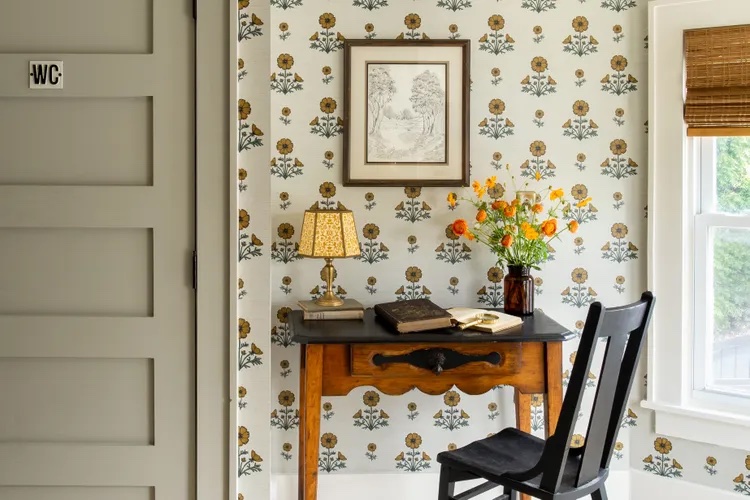
Floral block print wallpaper by Chasing Paper
Large scale botanicals are still very much in play, particularly in dining rooms and powder rooms, but the tone has changed. Designer Janine Carendi MacMurray of AREA Interior Design in New York describes the new botanicals as bold without tipping into chaos. The move, she notes, is pairing them with a classic palette so the drama reads intentional rather than trend driven.
Chinoiserie is back. So are Art Deco motifs, marbled papers, and murals that evoke Flemish tapestry. Each one gives a room something to say.
The Palette Has Quieted
The colors on all of this have shifted meaningfully. Earthy pigments. Softened contrasts. Tones that marble into one another rather than sit in high contrast.
Green is doing something new. Interior designer Elizabeth Hay is seeing earthy, verdant papers used almost as neutrals, backgrounds that stay calm while still adding richness. It is a useful thing to know when planning a room you actually have to live in.
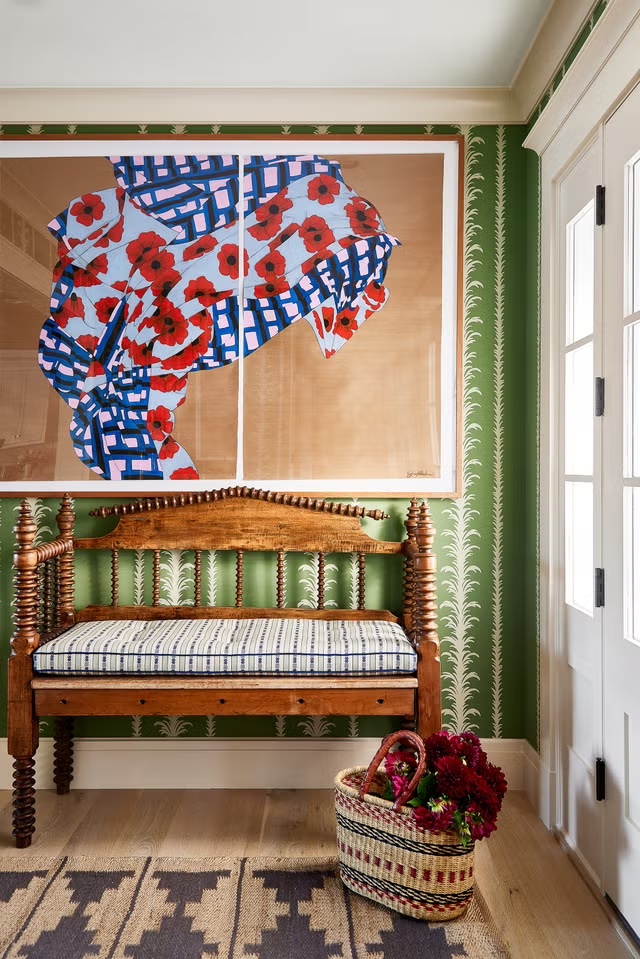
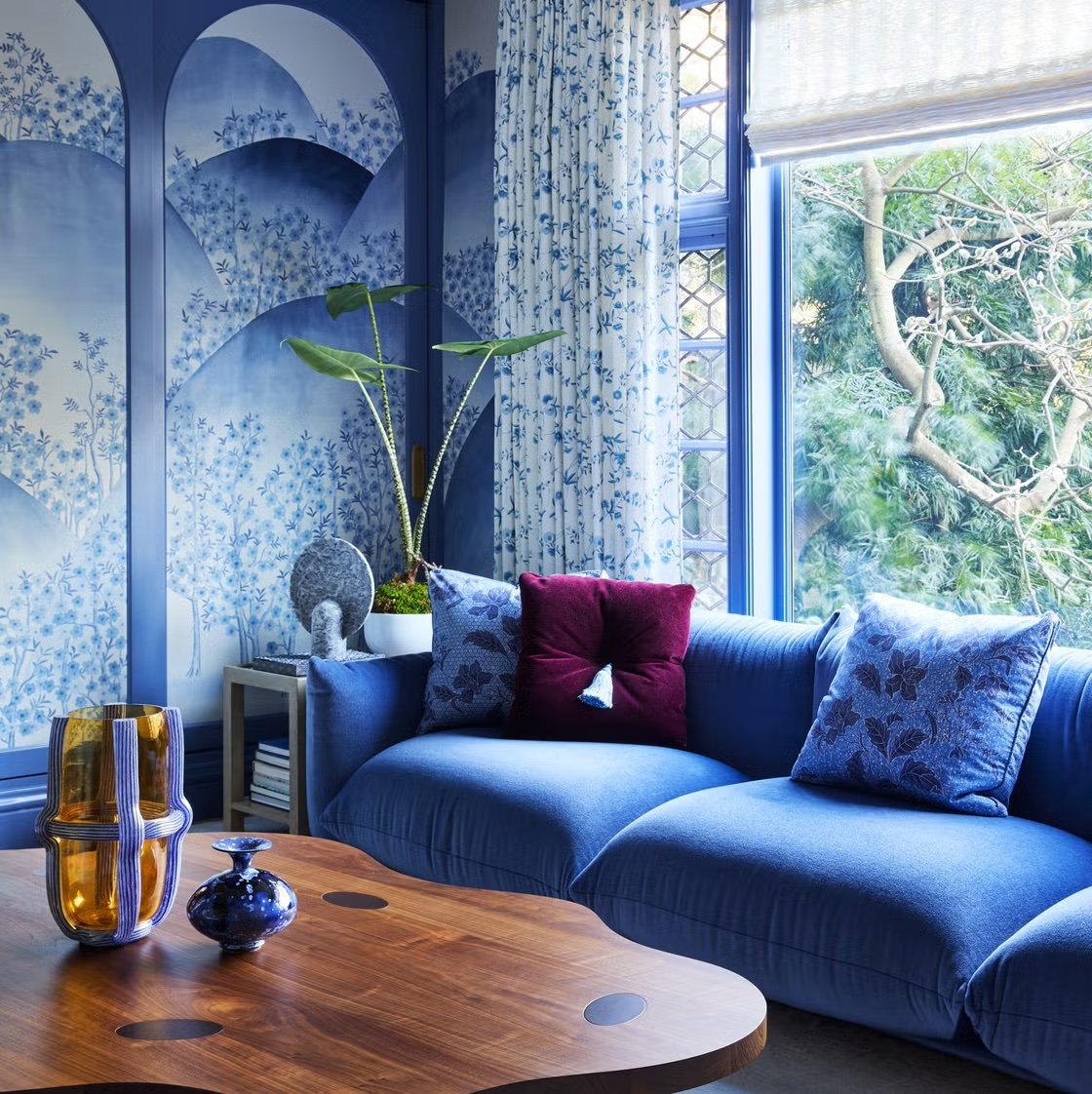
A room by Elizabeth Hay, using green as a neutral
Metallics are back too, but the cool silvers of the early 2020s are out. What is in are warm brass and gold, often as subtle sheens inside silk or grasscloth grounds rather than as their own statement.
Where Designers Are Putting It
The most interesting decisions of 2026 are not about pattern. They are about placement.
Ceilings are being papered. Cabinet interiors. The back of a niche. The inside of a library. Houston designer Linda Eyles argues that any room benefits from a little brightening, even a laundry room. Cathy Cherry of Purple Cherry Architecture recommends starting somewhere contained, a powder room, a study, a single wall in an entry. Places where trim naturally stops the eye and lets the drama sit.
The oldest advice about wallpaper is still the best. The powder room is the safest place to be brave.
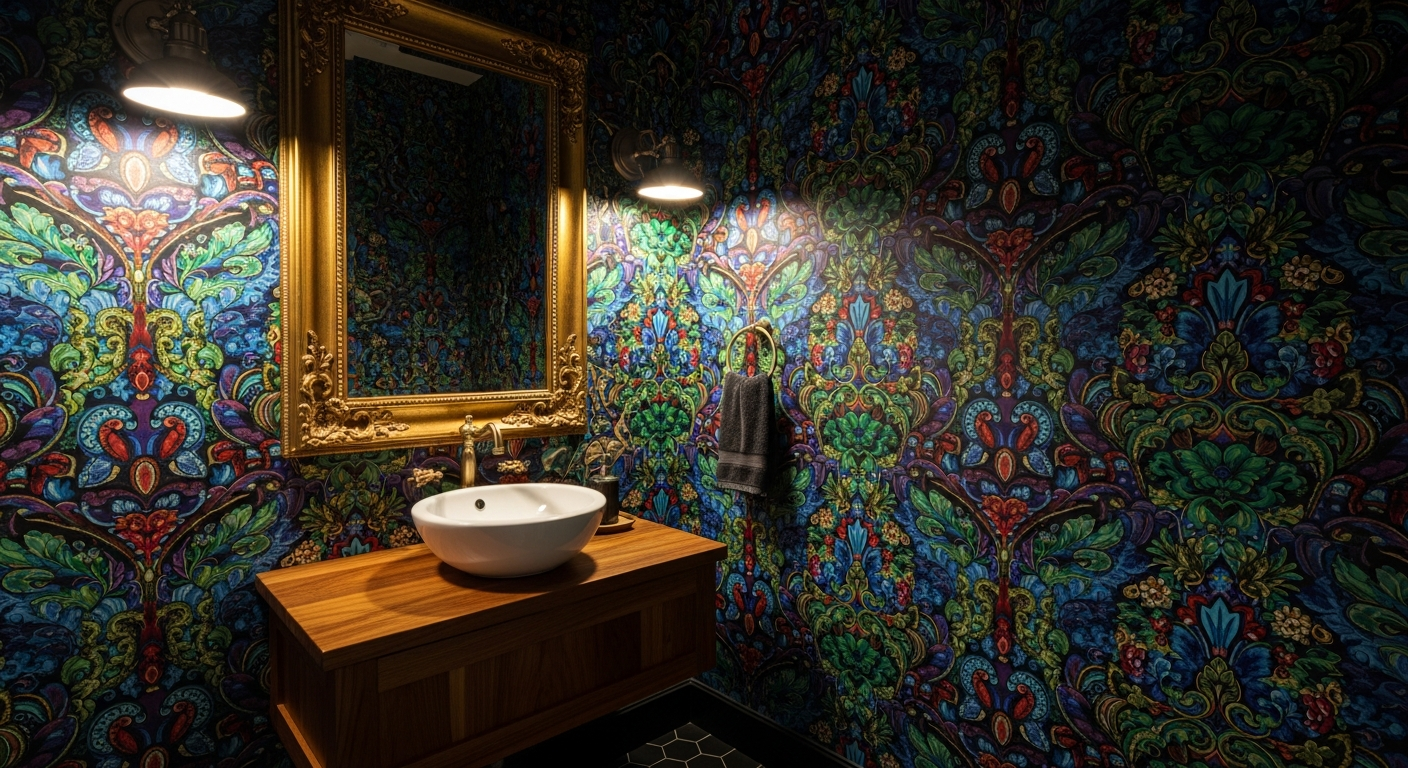
A powder room wrapped floor to ceiling in pattern
The Rug Rule, Inverted
For anyone considering a project this year, Eyles offered the piece of advice that most surprised me. Designers traditionally build a room around the rug, because the rug is usually the biggest element in the space. But once you paper the walls, the walls become the largest thing in the room. Which means, she said, they should be chosen first, even before the rug.
That reordering is a good summary of where the discipline is right now. Wallpaper is no longer the finishing touch. It is the frame everything else hangs on.
In an Upper Northwest home, the architecture rewards it. Foyers with formal proportion. Dining rooms built for evening light. Powder rooms tucked behind millwork. Libraries with real gravity. These are rooms designed to hold a considered surface, and after a long stretch of quiet walls, they are finally getting one.
Considering a move in DC, Chevy Chase, or Georgetown, or simply thinking about how your home lives and reads? I would be glad to help.
Andrew Smith
Vice President, TTR Sotheby's International Realty