Design + Real Estate
What Renovating a Wardman Taught Me: A 1906 Bloomingdale Row House, Featured in Architectural Digest
What a 1906 Bloomingdale row house, a total gut renovation, and a feature in Architectural Digest taught me about the art of seeing a home’s potential.
March 2026
Carl and I had lived one block up from this house for years. We walked past it constantly and always admired it. The carriage house in particular, which is unusually large and sits at the back of the property in a way that makes the whole lot feel more generous than a typical Bloomingdale row house. The owner was a sweet older man who had lived on that block his entire life, except for his years in the Army. When word reached us that he might be interested in selling, we didn’t hesitate. What followed was a full Wardman row house renovation in Bloomingdale, DC that would eventually end up in the pages of Architectural Digest.
The house was, as AD put it, “in really rough shape.” Decades of life filled every room: Christmas ornaments, old magazines, things collected over a lifetime. But the bones were extraordinary. Original woodwork. Bay windows. The condition was a distraction. The architecture was the point.
A few years later, in February 2023, Architectural Digest featured the finished home. This is the story of what happened in between.
The Philosophy Behind Our Wardman Row House Renovation
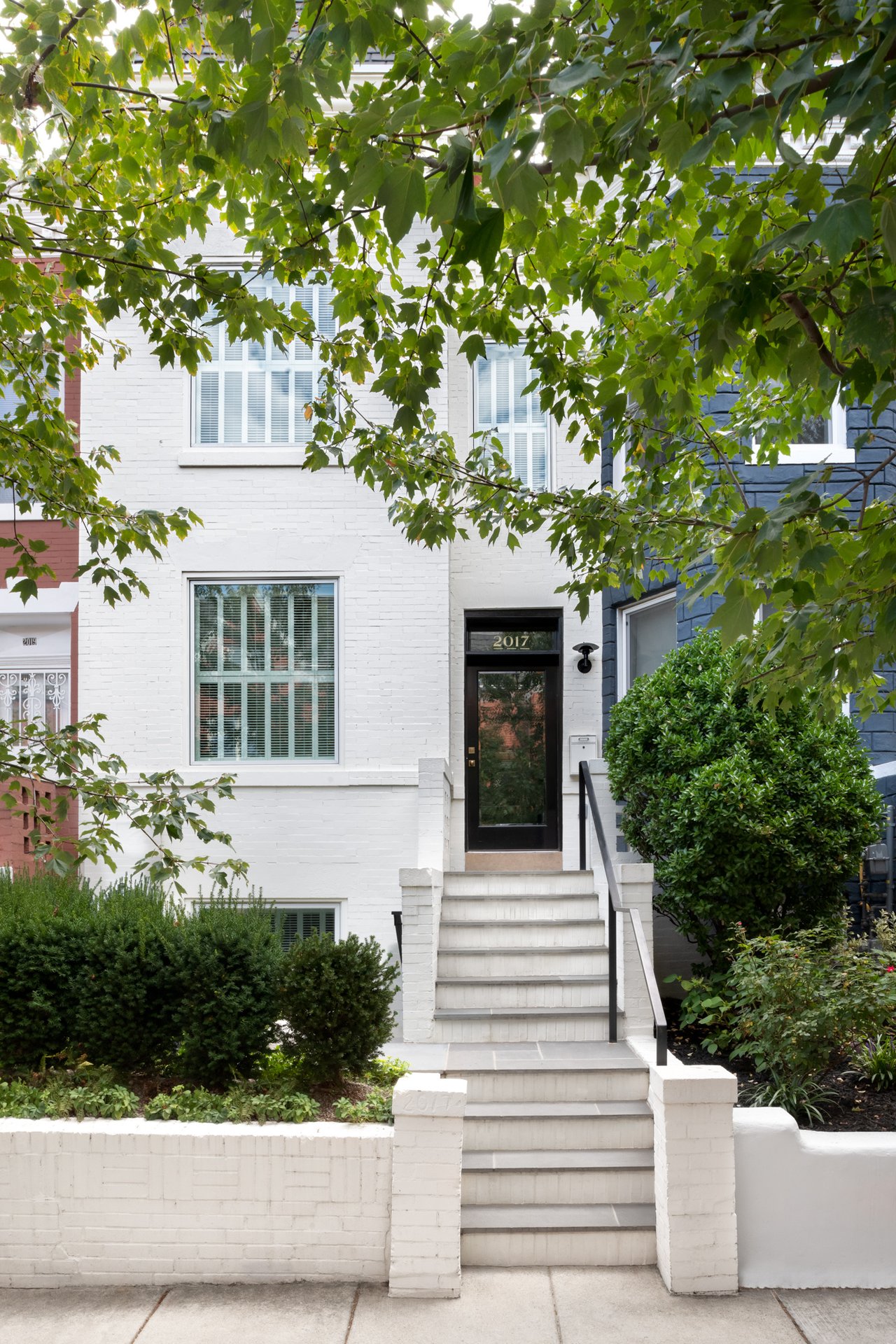
To understand the house, you have to understand Harry Wardman. British-born and self-made, he became the most prolific residential developer in DC history. When he died in 1938, an estimated one in ten DC residents lived in a home he had built. Bloomingdale was one of his signature neighborhoods, and our 1906 row house is a Wardman.
Wardman homes carry an obligation. You don’t modernize one into something unrecognizable. You steward it.
From day one, the design philosophy was simple to state and hard to execute: keep original wherever we could, and replicate faithfully when we couldn’t. Not approximate. Not “inspired by.” Replicate.
The vestibule tile is a good example. The original mosaic was there but too far gone to restore, so we had it remade exactly. A visitor today has no idea it isn’t original. That’s the point. Same logic for the front door (a faithful replica) and all the trim work. The vestibule door and the large dining room pocket door, both original, we kept.
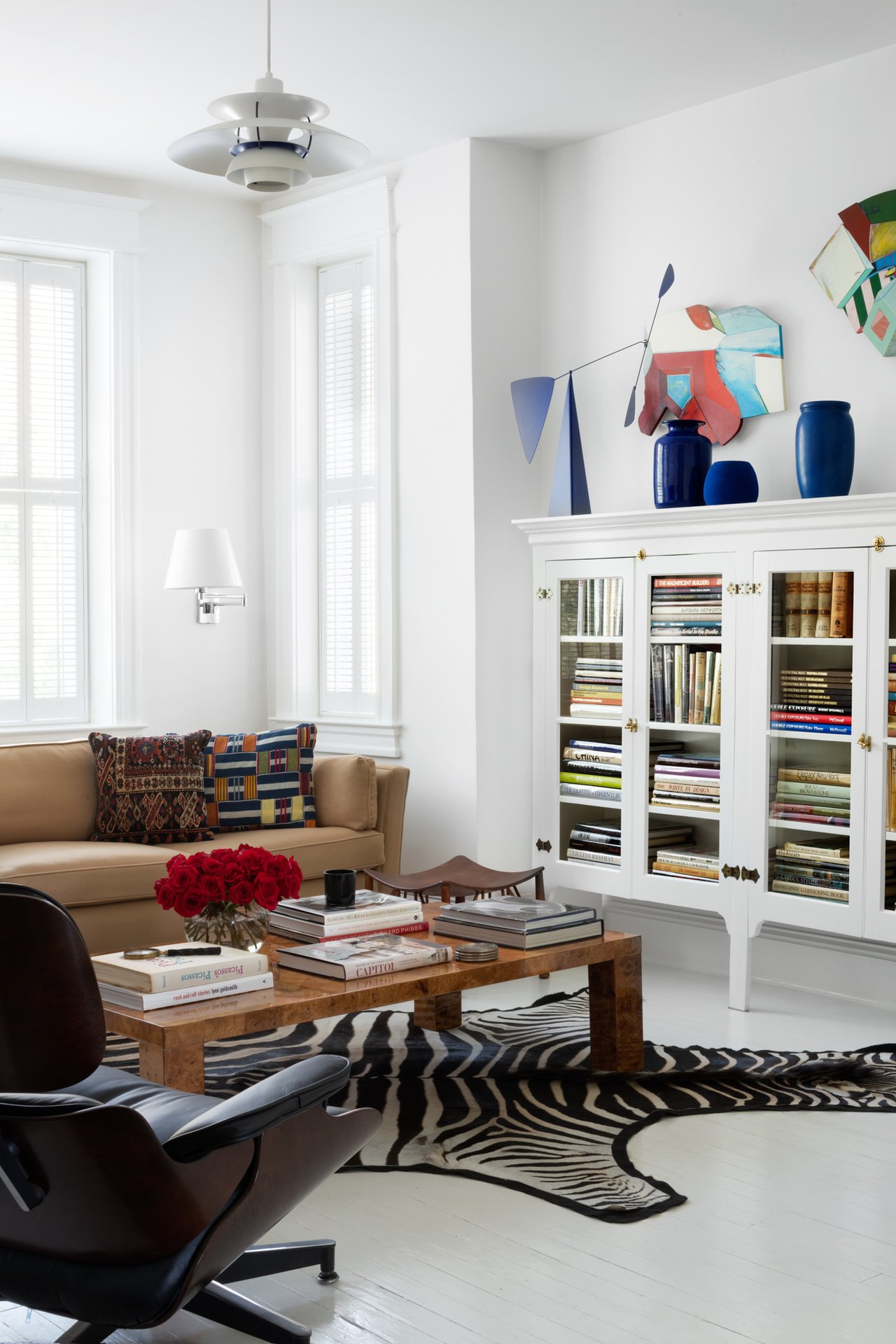
Our designer Patrick Mele resisted the open-concept reflex from the start. He wanted to avoid what I jokingly called “the bowling alley effect,” where you stand at the front door and see straight through the entire first floor. We kept the rooms distinct. As Patrick put it: “It’s the act of leaning into what a house is, as opposed to pretending it’s a loft.” The moldings, the proportions, the original woodwork all survived because of that call.
The Team
A project like this lives or dies by the team.
Patrick Mele, Interior Designer (AD100)
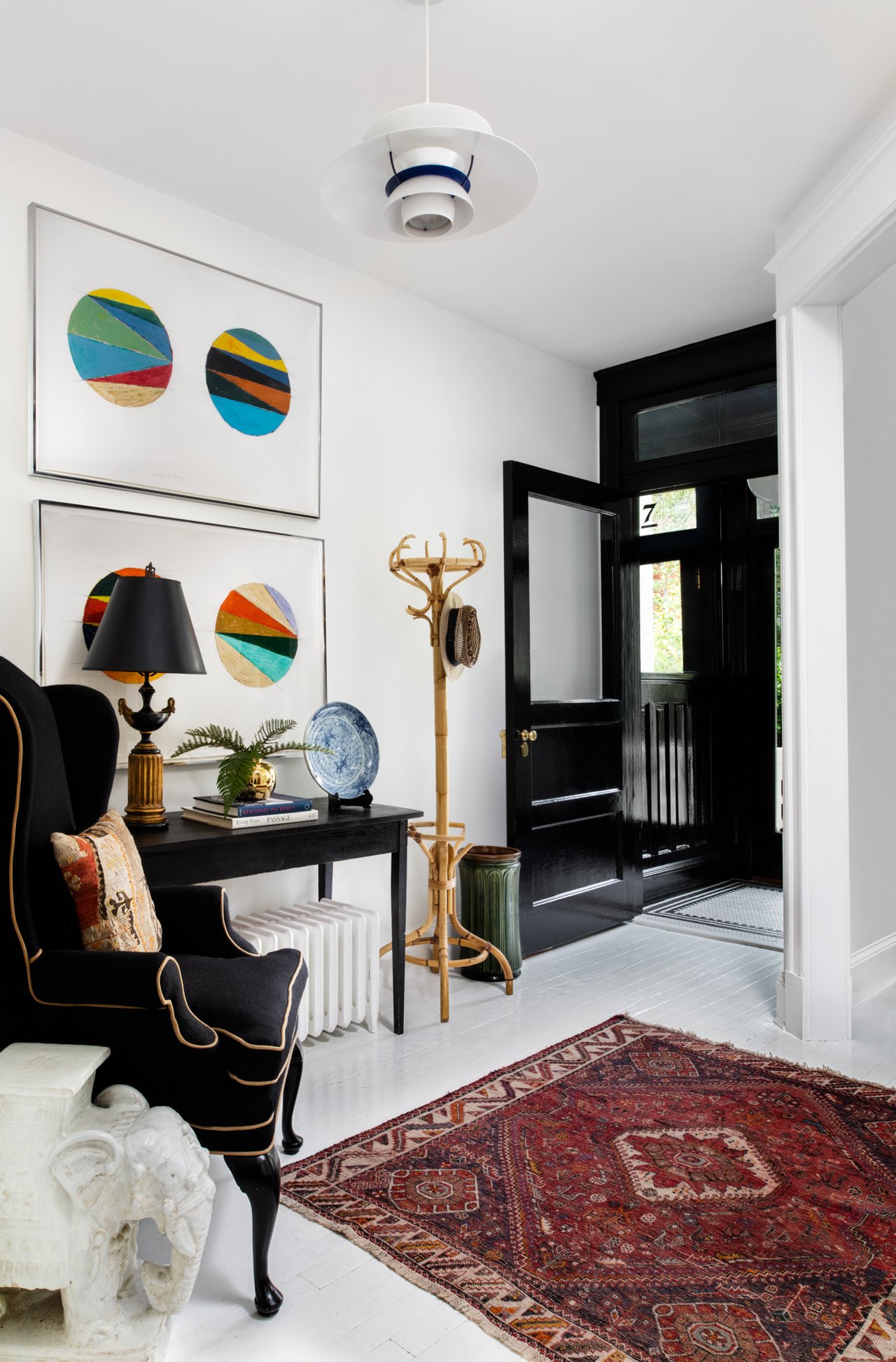
Patrick is an AD100 designer and a longtime friend. He brought the interiors to life with a confident, punchy sensibility that manages to feel both timeless and of-the-moment. The design through-line he established (a black-and-white palette, high-gloss white floors, mirrored surfaces to expand the narrow footprint) gave the house a coherent visual identity from room to room.
Patrick has a rare ability to mix antique, modern, and playful in a way that feels intentional rather than eclectic. AD described the kitchen as Gosford Park with a New Order soundtrack, which is exactly right.
Evelyn Pierce, Architect
Evelyn handled the architecture and was indispensable throughout. Her first visit to the backyard said it all: she described not knowing what she was “really stepping on because it was so overgrown.” What emerged was remarkable. Her instinct, like Patrick’s, was preservation with purpose.
Room by Room: What We Built
The Kitchen
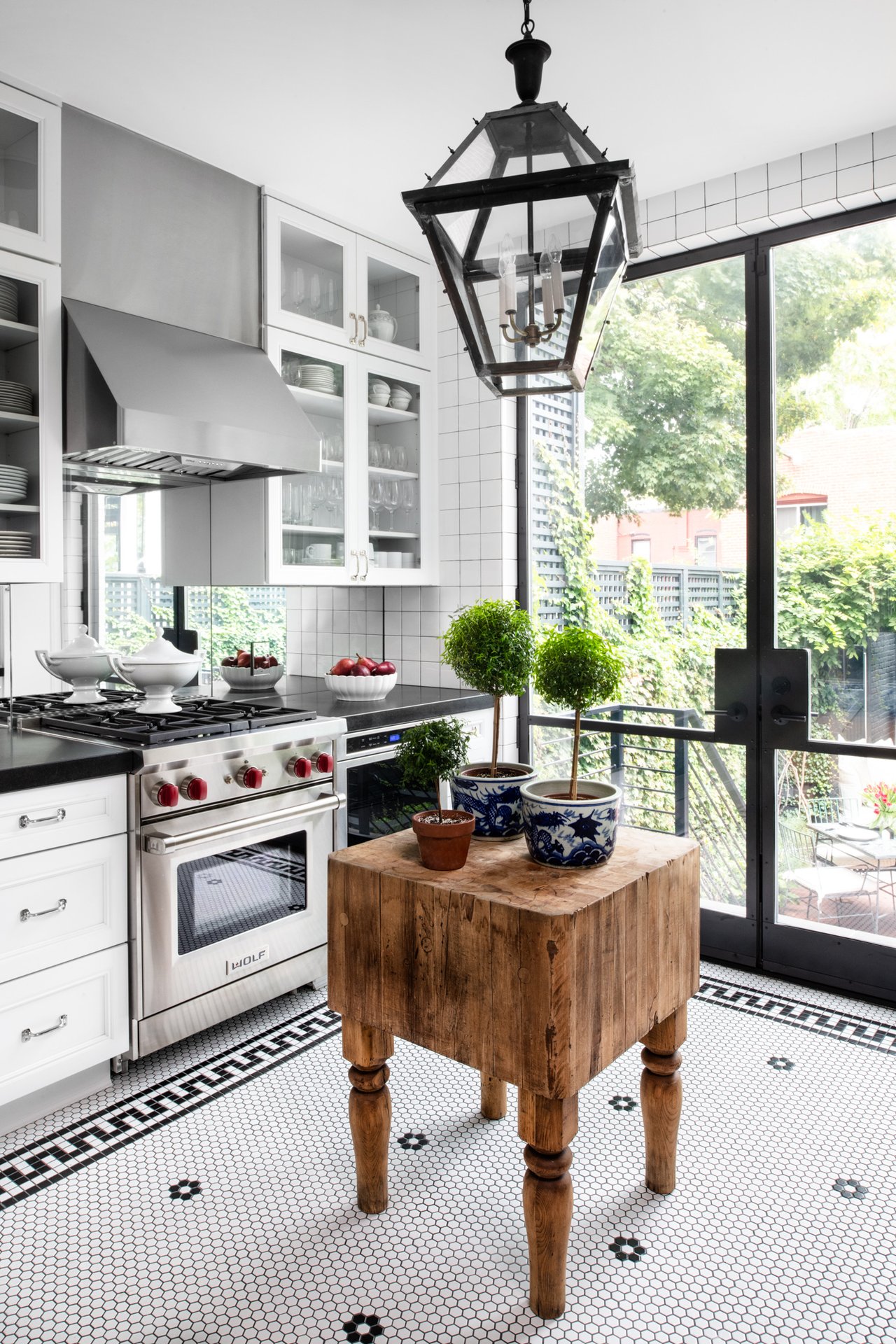
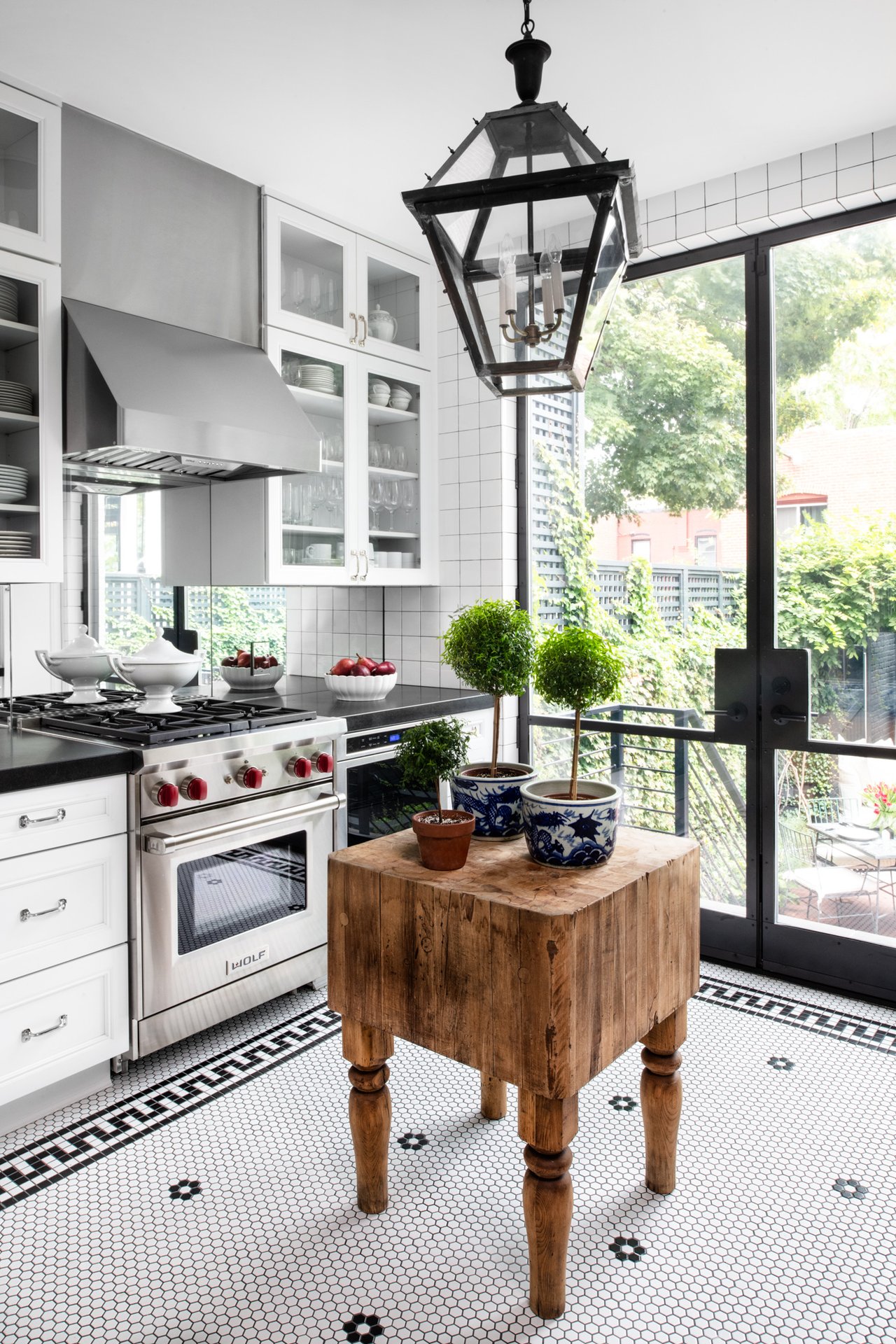
This was a total gut. The kitchen we designed was conceived to look like the kind of cook space that might have been in the house originally, reimagined with modern function. A Victorian-inspired mosaic floor with a rosette design and Greek key border to complement the mosaic in the entry vestibule. A mirrored backsplash and glass-front cabinets to create depth in a narrow room. A Wolf range as the anchor. A primitive wood butcher block as an ersatz island. And a new steel-and-glass door opening onto the backyard, flooding the space with natural light. At night with the under-cabinet lights on and the mirrors sparkling, it’s a genuinely magical little room.
The Backyard and Carriage House
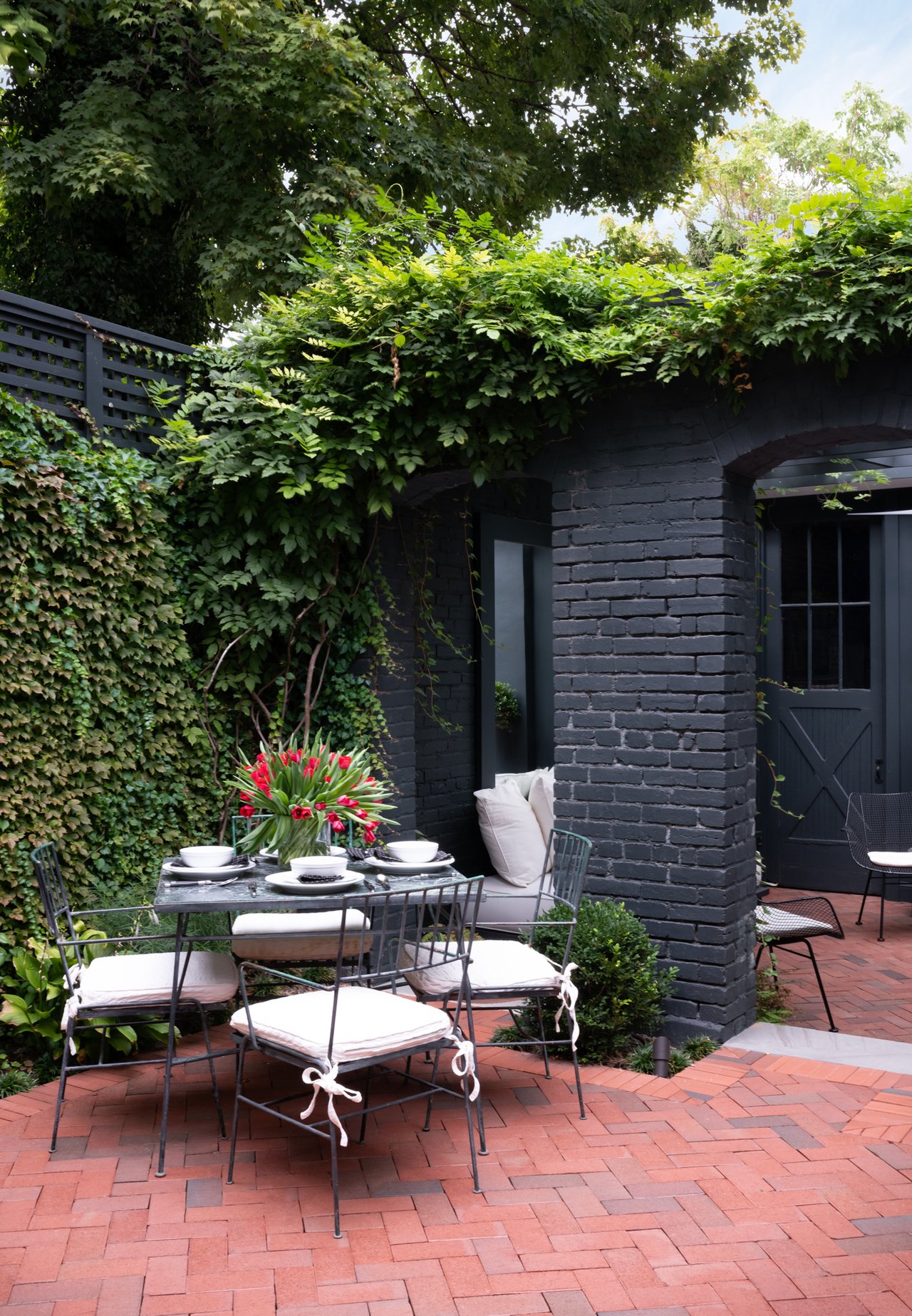
This was the project’s biggest transformation, and the space I’m most proud of.
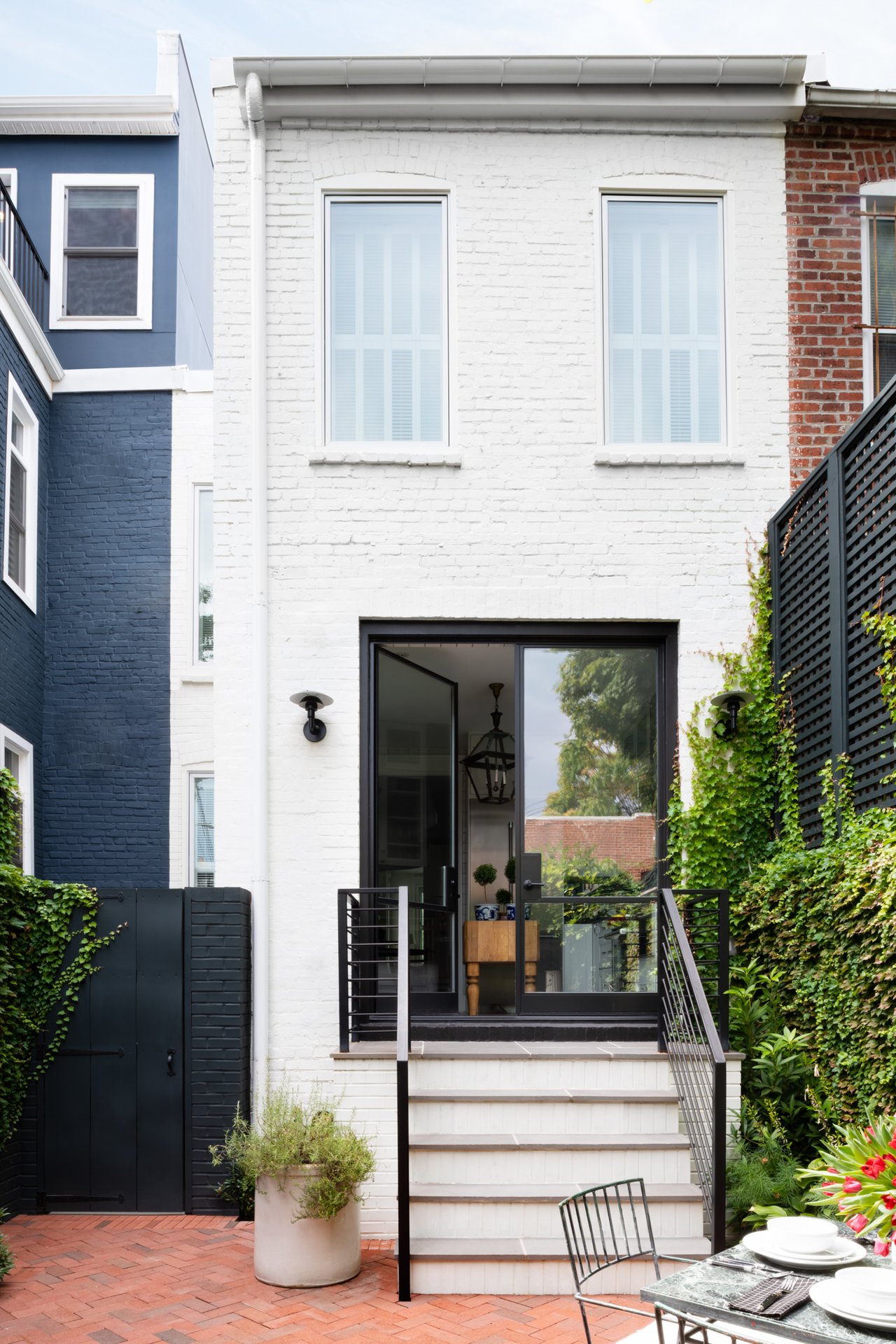
The backyard had been completely derelict, bounded by chain-link fences. We replaced those with brick walls painted in Benjamin Moore’s Essex Green, a deep and atmospheric blackforest green, and planted Boston ivy to climb them. Today those walls are entirely covered in ivy, and the space feels like a secret garden in the middle of the city.
The carriage house is what makes the space truly unique. On the alley side, a functioning garage. On the house side, an open-air living room: three equal archways (originally one door and two windows), two nine-foot barn doors sourced from Community Forklift, a central fireplace, and custom daybeds in Schumacher white canvas. Wisteria overhead provides shade in summer and drops hundreds of fragrant blossoms in spring. There is no better place in DC to have dinner with friends.
A herringbone brick patio connects the kitchen to the carriage house, with a small dining area for alfresco meals. The whole space channels the courtyards of nearby Georgetown: that sense of arriving somewhere unexpected in the middle of an urban block.
The Primary Bedroom and Bath
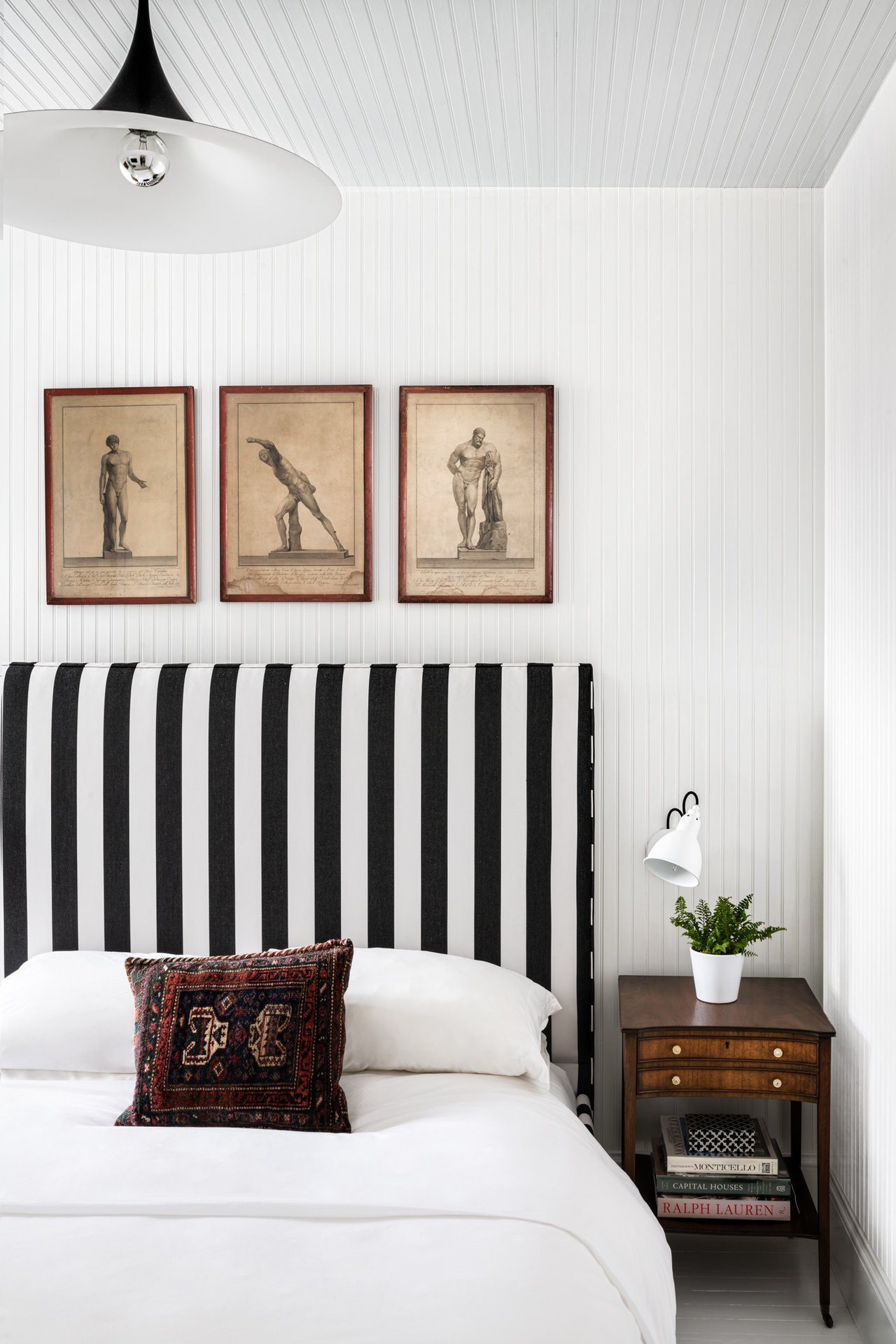
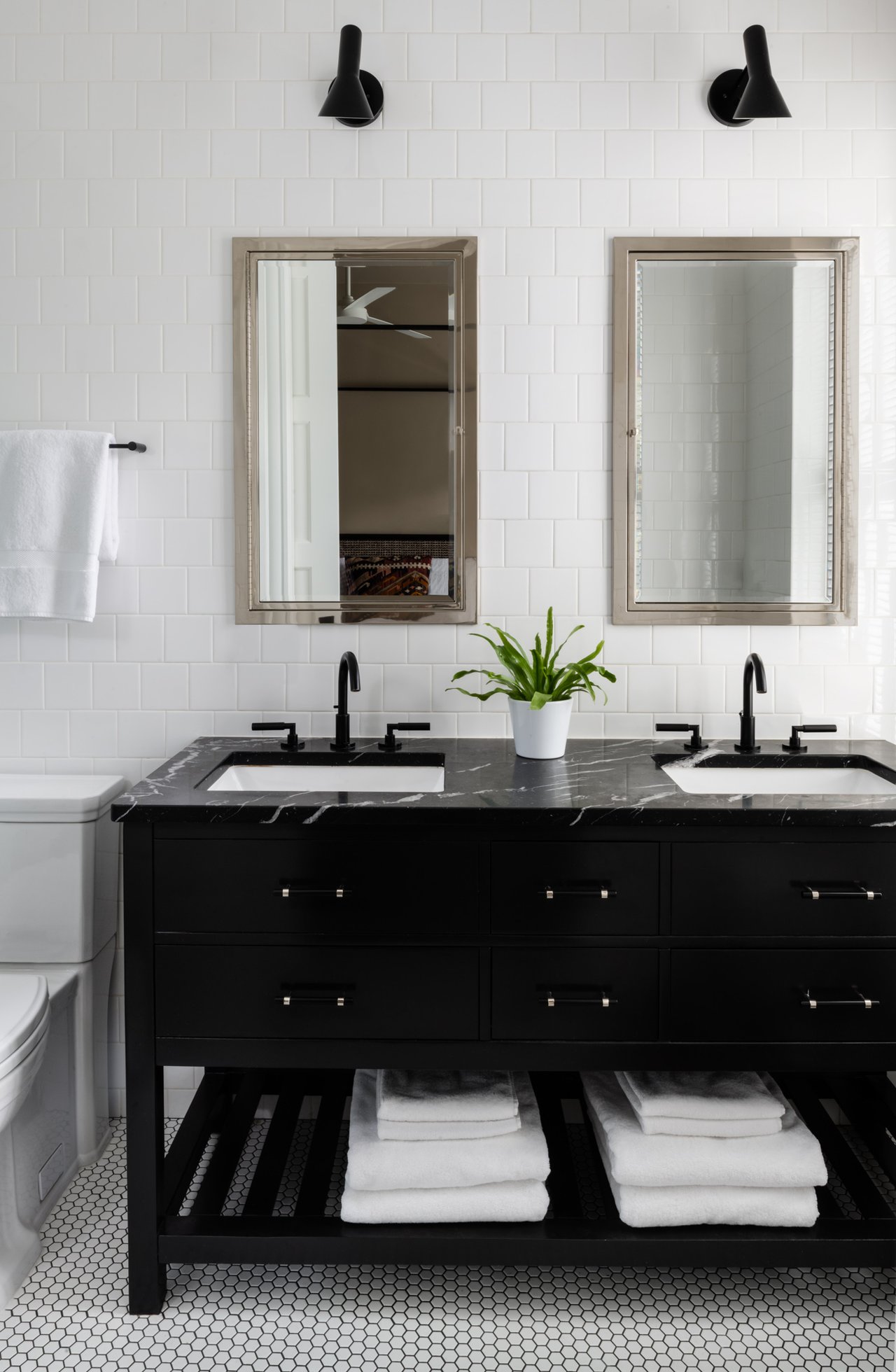
The bedroom is painted in Farrow and Ball’s London Stone, warm and earthy, a cocoon. An RH four-poster bed anchored with Alan Campbell’s Fez fabric on the headboard. The room has a confident 1980s quality to it that Patrick was channeling throughout: a moment when decorating was unapologetically beautiful. The primary bath pairs a custom double vanity with a black soapstone countertop and Rohl faucets against period-appropriate hexagon floor tile. It feels expensive without advertising it.
Lessons Learned
Every renovation teaches you things. Here’s what this one taught me.
See past the clutter to the bones. The house that becomes extraordinary is often the one that looks worst on first viewing. What matters is the architecture: the ceiling heights, the original details, the structural integrity. Everything else is noise. This is a lesson I carry into every client conversation I have today.
Keep it, or get it exactly right. When you can’t preserve the original, replicate it faithfully. A close approximation is a missed opportunity. Our vestibule tile is a replica of the original pattern. Guests never know. That’s the standard to hold yourself to.
Resist the open-concept reflex. Not every house wants to be a loft. In a Victorian row house, the room structure is part of the character. Opening walls can create flow while destroying soul. Ask whether you’re improving the house or just making it easier to sell. Those are different questions.
The backyard is always worth the investment. In DC, outdoor space is at a premium. A derelict backyard is one of the highest-return opportunities in an urban renovation. Buyers feel outdoor rooms. They linger there during showings. They imagine their life in them.
Hold weekly meetings with your contractor and architect. This was the most helpful process decision we made. Even with detailed plans, new questions emerge constantly once work is underway. A weekly meeting gets those answered in days rather than weeks and keeps everyone accountable. We cannot recommend it highly enough.
Hire people whose taste you trust completely, then get out of the way. Patrick had a vision and we let him execute it. That white floor was not obvious to us. The Pitch Black powder room gave us pause. The $35 salvage table base was Patrick’s call. Every one of those choices ended up in the magazine.
Budget for the unexpected, then double it. An 1906 row house will not give up its secrets cheaply. There will be systems, surprises, and decisions made in walls by people long gone. The renovation that goes smoothly is the one where you’ve planned for the renovation that doesn’t.
The Upgrades We Can’t Live Without
A few things we added that we thought were indulgences. They are not indulgences. They are requirements.
Heated tile floors. We have them in the bathrooms and we will never live without them again. There is a specific kind of misery that is a cold tile floor on a winter morning. The cost is reasonable relative to the daily quality-of-life improvement. Worth every penny.
Drawers in the kitchen. Not cabinets. Drawers. Deep, well-organized drawers that pull all the way out so you can see what’s inside. We converted as much lower cabinet space to drawers as possible and it changed how the kitchen functions. Once you cook in a kitchen designed this way, you cannot go back.
A tankless water heater. Unlimited hot water. That’s it. That’s the pitch. No tank to run out, no wait, no timing showers around each other. In a house with guests it is a revelation. We should have done this years ago.
A Sonos amp with in-wall speakers. We wanted music throughout the house without speakers cluttering every tabletop and shelf. In-wall speakers wired to a Sonos amp solved that. The sound is excellent, the system is invisible, and you control everything from your phone. If you’re renovating down to the studs anyway, run the wire.
A ceiling fan in the bedroom. We’re from the South. This was never optional. A ceiling fan is the difference between sleeping and not sleeping in a DC summer. There are beautiful ones now that look nothing like the builder-grade versions of twenty years ago. Put one in every bedroom, full stop.
Jib doors with piano hinges on storage and utility closets. A jib door matches the surrounding wall exactly, same trim and paint, so it disappears when closed. We used them throughout the house. Clutter hides behind walls that look like walls, and guests can never quite place why the rooms feel so uncluttered.
WiFi-enabled light switches. Control every light from your phone, set schedules, or turn everything off from bed. You don’t know you need it until you have it. We put them throughout the house and the convenience is real.
Dimmers. Everywhere. Yes, everywhere. Every room. Every fixture. The ability to modulate light is the single most impactful thing you can do to change how a space feels at different times of day. Overhead light on full blast is almost never the right answer. Dimmers make every room better, every evening better, every gathering better. Put them everywhere.
On Being Featured in Architectural Digest
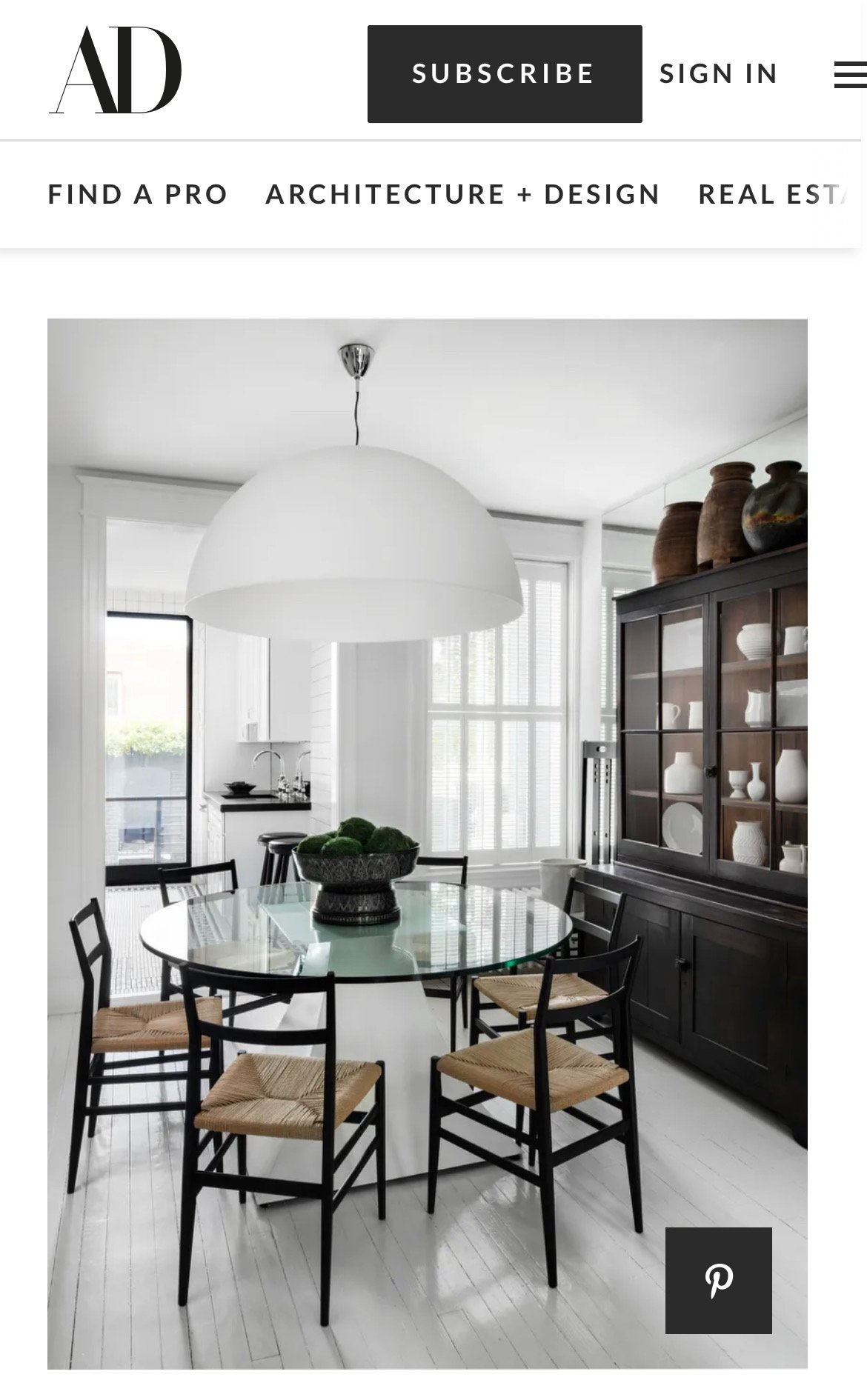
The AD feature came about the way the best things often do: over drinks and dinner with a friend. An editor at Architectural Digest, he came over before dinner at the Red Hen. Just a quick drink, nothing planned. He walked through the house, was genuinely taken with it, and thought it was worthy of the magazine. A few months later, it was.
What the feature captured was the coherence of the whole. The house has a point of view. That doesn’t happen by accident. It happens because everyone committed to a vision and saw it through, even when it was expensive or counterintuitive.
I think about that house constantly in my work. When I walk a property with a client who can’t see past the condition, I think about what Carl and I recognized when we first stepped into Bloomingdale: that the bones were extraordinary, and everything else was solvable. When I advise a seller on preparing their home for market, I think about what Patrick and Evelyn understood: that the goal is not to neutralize a house but to reveal its highest self.
The full feature is available at Architectural Digest.
Andrew Smith is a luxury residential real estate agent with TTR Sotheby’s International Realty in Washington, DC.
If you're considering a renovation or preparing your home for market, Andrew can help you see where the real opportunity is.
Vice President, TTR Sotheby’s International Realty
Specializing in Upper Northwest Washington, DC