Wesley Heights: Where Quiet Elegance Meets Parkside Living
Perched on the rolling hills above Georgetown, Wesley Heights occupies one of Washington's most enviable positions—elevated in both geography and character. The neighborhood unfolds along wide, winding streets where grand homes sit on generous lots, many hidden behind mature hedges and stone walls. It's a place where privacy is paramount and discretion is an art form.
The Feel
Wesley Heights operates at a remove from the bustle of official Washington. The streets are quiet and notably wide, the lots are deep, and the sense of arrival is unmistakable. This is old Washington—not in the sense of decay, but of permanence. Families have lived here for generations, and the neighborhood's character reflects that continuity: unhurried, confident, uninterested in trends.
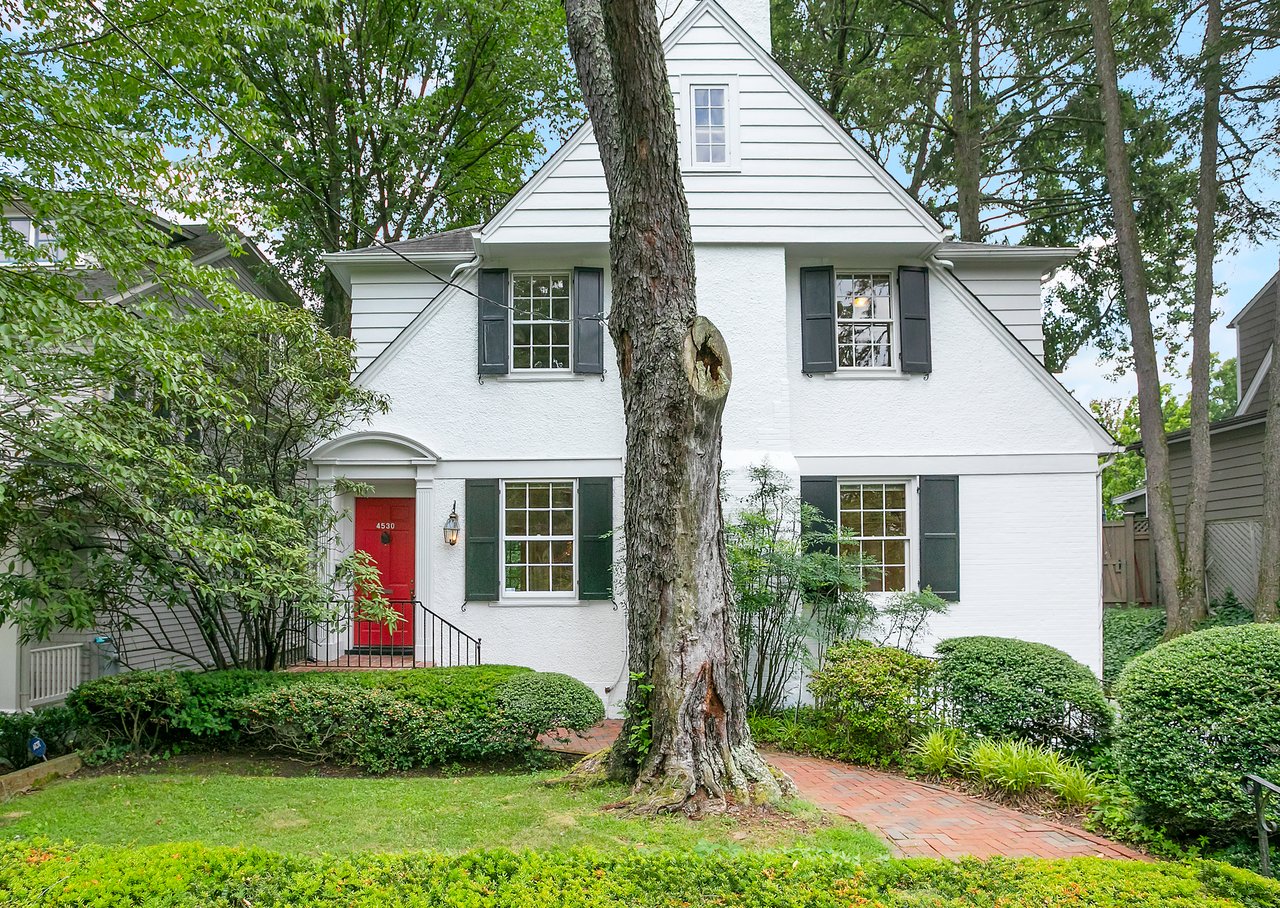
The topography matters here. Homes are positioned to take advantage of dramatic elevation changes, with many offering sweeping views toward the National Cathedral or across wooded ravines. Large mature trees—oaks, maples, tulip poplars—form a canopy overhead that filters light and softens sound. The architecture beneath them—primarily Georgian, Colonial Revival, and Tudor—reflects an era when houses were built to last and designed to impress without shouting.
What strikes newcomers is the stillness. Children play in expansive yards. Residents walk their dogs along sidewalks that seem almost country-lane quiet. The city feels distant, even though downtown is fifteen minutes away.
What Draws People Here
Space and Privacy In a city where lot sizes are measured in hundreds of square feet, Wesley Heights offers something exceptional: room to breathe. Half-acre lots are common; full-acre estates exist. For those who value privacy—and many residents here do, professionally and personally—this matters enormously.
Architectural Distinction The homes of Wesley Heights represent some of Washington's finest residential architecture. Many were designed by prominent architects of the early twentieth century and have been meticulously maintained or thoughtfully updated. These are houses with libraries, formal gardens, carriage houses, and the kind of craftsmanship that simply isn't replicated today.
A Quietly Central Location Wesley Heights sits at a geographic sweet spot. Georgetown is five minutes south. Bethesda is ten minutes north. Arlington is just across Chain Bridge. Downtown DC is a fifteen-minute drive. This kind of access—without sacrificing the neighborhood's insulated character—is increasingly rare in the region.
The Neighborhood in Practice
- Glover-Archbold Park — This 183-acre urban forest runs along the neighborhood's eastern edge, offering miles of hiking trails through old-growth trees and stream valleys. For residents, it functions as an extended backyard—a place for morning runs, afternoon walks, and that rare commodity: genuine quiet.
- Battery Kemble Park — Additional trails wind through this wooded preserve on the neighborhood's western boundary, connecting to the Palisades and offering even more opportunity for outdoor exploration without leaving the immediate area.
- Chef Geoff's — A neighborhood anchor that strikes the right balance: polished enough for a proper dinner, relaxed enough for a weeknight with the family. The patio is a local gathering spot when weather permits.
- The Cathedral Close — Washington National Cathedral and its surrounding grounds anchor the neighborhood's cultural life. Concerts, services, and the annual Flower Mart draw residents into a shared civic experience.
- Georgetown & Friendship Heights — While Wesley Heights maintains its residential character, Georgetown's shops, restaurants, and waterfront are minutes away in one direction, while Friendship Heights offers convenient retail in the other. Residents enjoy the best of both worlds: retreat and access.
Architecture & Homes
Wesley Heights developed primarily in the 1920s and 1930s, and its housing stock reflects the design sensibilities of that era. Georgian Colonials predominate, their brick facades and symmetrical proportions projecting stability and taste. Tudor Revivals add variety with steeply pitched roofs and decorative half-timbering. More contemporary homes, carefully designed to complement their surroundings, have filled in remaining lots over subsequent decades.
What distinguishes Wesley Heights architecturally is scale. These are substantial homes—4,000 square feet is modest by neighborhood standards—on substantial lots. Many feature original details that have become increasingly rare: plaster moldings, mahogany paneling, slate roofs, and copper guttering. Gardens and grounds receive as much attention as interiors, with mature boxwoods, specimen trees, and professionally maintained landscapes creating a sense of estate living within city limits.
The Practical Details
Schools: Horace Mann Elementary School serves the neighborhood and maintains a strong reputation. For younger children, Metropolitan Preschool offers an excellent early education option within the community. Many families also take advantage of Washington's exceptional independent school network, several of which are nearby.
Commute: Massachusetts Avenue and Foxhall Road provide direct routes to downtown and Georgetown. The lack of Metro access is intentional rather than inconvenient—most residents prioritize privacy over transit, and the neighborhood's central location makes driving practical. Bethesda, Arlington, and downtown are each easily reached in fifteen minutes or less.
Proximity: Georgetown is five minutes away. Bethesda, ten. Downtown, fifteen. Reagan National, twenty. Dulles International, forty-five.
Who Lives Here
Wesley Heights attracts those who have achieved a certain level of success and prefer not to advertise it. You'll find senior partners at white-shoe firms, former cabinet secretaries, ambassadors, and established families whose names appear on museum wings and university buildings. The neighborhood has long been home to diplomatic residences, and that international presence adds a layer of sophistication without disrupting the prevailing atmosphere of quiet reserve.
These are people who could live anywhere—and have chosen Wesley Heights precisely because it doesn't seek attention. The homes are grand, but the lifestyle is private. There are no trendy restaurants on the corner, no boutique hotels attracting visitors, no reason for anyone to pass through unless they belong. For those who value that kind of insulation—while remaining minutes from everywhere that matters—Wesley Heights offers something Washington's more celebrated neighborhoods cannot.
Frequently Asked Questions About Wesley Heights
Is Wesley Heights a good neighborhood in Washington, DC? Wesley Heights is widely considered one of Washington DC’s most desirable residential neighborhoods. Known for its large lots, quiet streets, and distinguished architecture, the neighborhood offers a rare combination of privacy, space, and proximity to the city’s core. Residents enjoy estate-style homes, access to nearby parks, and convenient connections to Georgetown, downtown Washington, Bethesda, and Arlington.
Where is Wesley Heights located in Washington, DC? Wesley Heights is located in Upper Northwest Washington, DC, just north of Georgetown. The neighborhood sits between Massachusetts Avenue, Foxhall Road, and New Mexico Avenue, with Glover-Archbold Park forming much of its eastern boundary. Its location provides quick access to Georgetown, American University, and downtown Washington.
What types of homes are in Wesley Heights? Wesley Heights is known for its early twentieth-century architecture, particularly Georgian Colonial, Colonial Revival, and Tudor Revival homes built in the 1920s and 1930s. Many properties sit on large lots—often half an acre or more—and feature original architectural details such as slate roofs, plaster moldings, and formal gardens. Renovations and newer custom homes have also appeared over time while maintaining the neighborhood’s historic character.
How far is Wesley Heights from downtown Washington, DC? Wesley Heights is approximately five miles from downtown Washington, DC. Depending on traffic, most residents can reach the central business district in about fifteen minutes by car. Georgetown is roughly five minutes away, while Bethesda and Arlington are typically ten minutes away.
Does Wesley Heights have access to parks and outdoor space? Yes. Wesley Heights borders Glover-Archbold Park, a 183-acre urban forest with miles of trails used for hiking, running, and dog walking. Battery Kemble Park sits along the neighborhood’s western edge and offers additional wooded trails and open green space. These parks provide residents with immediate access to nature while remaining within city limits.
What schools serve the Wesley Heights neighborhood? Wesley Heights is served by Horace Mann Elementary School, one of the highest-rated public elementary schools in Washington, DC. Older students typically attend Hardy Middle School and Jackson-Reed High School. Many families in the area also consider private schools in nearby neighborhoods, including institutions in Georgetown, Tenleytown, and Bethesda.
Is Wesley Heights Metro accessible? Wesley Heights does not have a Metro station within walking distance. The closest stations are Tenleytown-AU on the Red Line and Friendship Heights on the Red Line. Most residents commute by car, with Massachusetts Avenue and Foxhall Road providing direct routes to Georgetown, downtown Washington, and surrounding areas.
What makes Wesley Heights unique compared to other DC neighborhoods? Wesley Heights stands out for its estate-scale properties, quiet residential atmosphere, and proximity to major Washington destinations. While many DC neighborhoods feature dense rowhouse development, Wesley Heights offers larger homes, expansive lots, and a more secluded setting. This combination of privacy and central location has attracted diplomats, senior government officials, and long-established Washington families for decades.
Who lives in Wesley Heights? Wesley Heights has long attracted prominent Washington residents, including diplomats, senior government officials, business leaders, and established families. The neighborhood’s quiet streets, large homes, and sense of discretion make it appealing to those who value privacy while remaining close to the political and cultural life of the capital.
Why do people move to Wesley Heights? People choose Wesley Heights for its rare combination of space, architectural beauty, and location. Large lots, historic homes, access to nearby parks, and proximity to Georgetown and downtown Washington make it one of the most prestigious residential areas in the city. For many buyers, Wesley Heights offers a suburban level of privacy without leaving the District.
Are there restaurants and shops near Wesley Heights? While Wesley Heights itself remains primarily residential, nearby Georgetown and Friendship Heights offer extensive dining and shopping options. Local favorites such as Chef Geoff’s provide neighborhood dining, while Georgetown’s restaurants, waterfront, and retail district are only minutes away.